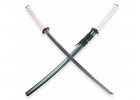
Samurai Sword Katana
Samurai katanas – from your first katana to exceptional collector’s pieces
A katana is not merely a characteristically curved Japanese sword. Its quality is determined by the steel, blade construction, heat treatment, hamon, balance, handle and the quality of individual details.
At Nože a Katany you will find models for collectors and enthusiasts of Japanese swords – from more affordable replicas to finely crafted katanas made from T-10, AISI 1095, L6, S7 steel or traditional Tamahagane.
For your first katana
We explain the differences between steels, constructions and individual sword components so that you do not choose based on appearance alone.
For collectors
Focus on workmanship, the steel used, construction, genuine hamon, fittings and koshirae details.
Expert selection
We assess the range not only according to catalogue specifications, but also according to construction, workmanship, balance and practical handling.
#ShowMore#
How to choose the right katana?
The most common mistake when choosing a katana is to focus only on appearance. Two similarly looking katanas can differ significantly in material, construction, heat treatment, balance and handle quality. Before choosing, therefore, ask yourself one simple question: what do I really expect from my katana?
I want my first katana
Start with a safe and solid construction, suitable length, sensible balance and clearly specified blade material. There is no need to choose the most expensive model straight away.
I want a collector’s katana
Pay particular attention to blade quality, genuine hamon workmanship, the materials of individual components, the execution of the saya and tsuka, and the overall level of craftsmanship.
I want to understand the technical details
Compare the type of steel, blade construction, hamon, bo-hi, kissaki, tsuka, samegawa, ito, mekugi and other parts that influence the overall quality.
Which katana steel should you choose?
The steel designation alone does not determine the quality of the entire katana. Heat treatment, blade geometry, construction and manufacturing quality are also important. Even so, the type of steel is one of the best starting points for comparing individual models.
| Material | What to expect | Who it makes sense for |
|---|---|---|
| AISI 1045 | Carbon steel used especially for more affordable replicas. | Beginning collectors and decorative use depending on the specific model. |
| AISI 1065 | Carbon steel with a higher carbon content than AISI 1045. | Those looking for a higher-quality carbon steel blade. |
| T-10 / AISI 1095 | Steels often used for higher-quality replicas and blades with pronounced heat treatment. | More demanding collectors and enthusiasts seeking a more technically refined blade. |
| Folded AISI 1075 | The layered structure creates a characteristic blade pattern. | Collectors looking for the distinctive appearance of layered steel. |
| L6 | Spring steel valued for its combination of toughness and flexibility. | Customers looking for a more modern technical material. |
| S7 Shock Steel | Tool steel designed with an emphasis on resistance to impact loading. | More demanding enthusiasts interested in modern materials. |
| Tamahagane | A material associated with traditional Japanese sword-blade production. | Collectors looking for traditional character and exceptional craftsmanship. |
Katana with Bo-Hi or without a groove?
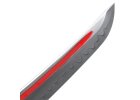
Bo-Hi is a longitudinal groove in the blade. It is not merely a decorative element – it changes the amount of material in the blade, its weight and how it feels in handling. One option is therefore not automatically “better” than the other.
Katanas with a Bo-Hi groove →
Removing part of the material can reduce blade weight and change its dynamics in motion.
Katanas without Bo-Hi →
A full profile retains more material in the blade and generally gives a more robust and substantial feel.
Katana anatomy: details that determine quality
When looking at a katana, we mainly see the blade and handle. In reality, however, it consists of many interconnected parts. With a higher-quality sword, it makes sense to consider not only the blade steel, but also the construction of the tsuka, fastening, wrapping, samegawa, tsuba and other components.
Steel, construction and basic indicators of blade quality.
HamonWhat hamon means and how to distinguish genuine hardening from a decorative effect.
Tsuka – handleHow the handle is constructed and how to recognise quality workmanship.
MekugiSmall pegs with an important structural and safety function.
TsubaKatana guard – function, construction and aesthetics.
SamegawaTraditional material beneath the handle wrapping and its significance.
ItoThe handle wrapping influences grip, stability and overall workmanship.
MenukiDecorative elements beneath the wrapping with both aesthetic and practical roles.
FuchiThe handle collar and part of the structural and decorative whole.
KashiraThe handle end cap and one of the details by which the overall workmanship can be assessed.
What is hamon and why is it important?
Hamon is the visible line associated with heat treatment of the blade on differentially hardened swords. It can take various forms – from calmer Suguha to more pronounced wavy or irregular patterns.
With a collector’s katana, it is important to distinguish between a genuine structure created during heat treatment and a purely decorative surface effect. An attractive line alone, however, is still not the only measure of sword quality.
Hamon in detail: how to recognise genuine katana hardening →
The katana and the tradition of the Japanese sword
Katana (刀) is one of the best-known types of Japanese sword. It is characterised by a curved, single-edged blade and a handle allowing a two-handed grip. In historical context, it was associated with the samurai class and gradually became one of the most distinctive symbols of the Japanese sword-making tradition.
Together with the shorter wakizashi, the katana could form a pair known as daishō. The broader family of Japanese blades also includes the tantō.
Katana care and safe handling
Carbon steels in particular require regular care. After handling, do not leave moisture, fingerprints or other dirt on the blade. Store the blade clean, dry and protected with a suitable thin layer of preservative intended for steel blades.
Safety first
A sharp katana is not a toy or an ordinary decoration. Handle it only in a safe environment, out of reach of children and other people. For practical training, use only a model suitable for the intended purpose and follow the manufacturer’s instructions as well as the guidance of a qualified instructor.
Stands, accessories and sword maintenance products →
Katana and Tameshigiri
Tameshigiri is traditionally associated with test cutting and today the term is also used in some schools of Japanese swordsmanship. Not every katana, however, is suitable for practical training. The specific sword construction, blade condition and recommended method of use are decisive.
For safe practical training, we always recommend proceeding under the guidance of an experienced instructor. Our range also includes Tatami Omote intended for Tameshigiri.
What does Marek Šmíd recommend?
“With a first katana, I would not let myself be drawn in only by elaborate decoration or an impressive hamon. I first look at the construction, the steel used, the handle workmanship, the balance and whether the individual parts make sense as a whole.”
Marek Šmíd has been working with knives and katanas for more than 10 years and since 2020 has also been practising traditional cutting techniques with a katana under professional guidance.
More about Marek Šmíd and his experience →What to check before choosing a katana
| Parameter | Why it matters |
|---|---|
| Purpose | Collector’s, decorative or a model designated by the manufacturer for a specific form of training. |
| Blade material | Influences the blade’s properties and maintenance requirements. |
| Construction | The way individual parts are made is crucial to overall quality. |
| Hamon | On a differentially hardened blade, it can be a visible trace of heat treatment. |
| Bo-Hi | Affects the amount of material in the blade and its dynamics. |
| Tsuka and fittings | Check the overall fit, strength and quality of the components used. |
| Dimensions and weight | A longer or heavier sword is not automatically better – overall balance is what matters. |
Not sure which katana to choose?
Call us on +420 702 049 048, Mon–Fri 7:30–16:00. We will help you compare specific models according to budget, material, construction and what you expect from the katana.
Frequently asked questions when choosing a katana
1. Which katana should I choose as my first?
For a first katana, we recommend focusing primarily on clearly specified blade material, quality construction, suitable size, handle workmanship and intended use. A high price or elaborate decoration alone does not guarantee quality.
2. What is the difference between a decorative katana and a higher-quality functional replica?
The difference usually lies mainly in construction, the steel used, heat treatment, handle quality, assembly and overall workmanship. Always follow the manufacturer’s intended use for the specific model.
3. Is a T-10 or AISI 1095 katana better?
This cannot be decided from the steel designation alone. Both T-10 and AISI 1095 are used for higher-quality replicas, but the final properties also depend on heat treatment, geometry and the construction of the specific blade.
4. What is Tamahagane?
Tamahagane is a material traditionally associated with Japanese sword-blade production. In collector’s replicas, it is encountered mainly in higher categories of swords.
5. What does Bo-Hi mean?
Bo-Hi is a longitudinal groove in the blade. By removing material, it can affect blade weight and dynamics. Katanas are made both with Bo-Hi and with a full profile without a groove.
6. What is a genuine hamon?
On a differentially hardened blade, hamon is the visible line associated with the different steel structure created during heat treatment. It should not be confused with a purely decorative line created only on the surface.
7. What are tsuka, tsuba, ito and samegawa?
Tsuka is the katana handle, tsuba the guard, ito the handle wrapping and samegawa the traditional material beneath the wrapping. Together with other parts, they influence the sword’s functionality, strength and appearance.
8. What are mekugi?
Mekugi are pegs used in the construction of the katana handle. They are a small but important part of the sword assembly and deserve attention when checking the condition of a katana.
9. How should a carbon steel katana be cared for?
Keep the blade clean and dry, do not leave fingerprints or moisture on it, and use a suitable preservative. Carbon steels are not corrosion-resistant and neglected care can lead to corrosion.
10. Is every sharp katana suitable for Tameshigiri?
No. Sharpness alone says nothing about whether a sword is suitable for practical training. The construction of the specific katana and the manufacturer’s recommendation are decisive. Train only safely and under professional guidance.
11. Is a more expensive katana automatically better?
Not automatically. A higher price can reflect materials, handwork, more complex manufacturing, decorative elements or collector’s value. Always compare the specific construction and workmanship.
12. How can I recognise a quality katana?
Assess the katana as a whole: blade material and workmanship, handle construction, fastening of individual parts, quality of fittings, balance and precision of the overall workmanship. A single parameter, such as hardness or steel type, is not sufficient on its own.